
by Kelly Campbell
Last month, pickleball was in the headlines for an unfortunate reason: the death of Jeff Webb, an entrepreneur known for being a mentor to Charlie Kirk, due to a pickleball-related accident.
As pickleball continues to be marketed as a safe and accessible sport for all ages, this news has players wondering just how much risk is involved in stepping onto the court.
Is this pickleball-related death, paired with an increase in reported pickleball-related injuries over the last few years, cause for concern? Keep reading as we explore pickleball’s risks and rewards.
What happened to Jeff Webb?
According to People, 76-year-old Jeff Webb fell while playing pickleball, sustaining a severe head injury. He died two weeks later, after his family made the decision to remove him from life support.
Webb was best known as the “father of modern cheerleading” and founded Varsity Spirit in 1974, but also for being a mentor to the late right-wing activist Charlie Kirk, founder of Turning Point USA. Varsity Spirit shared the news of Webb’s passing on March 19.
“Jeff played a pivotal role in shaping cheerleading as it exists today and in building a community that has impacted generations of athletes, coaches, and teams. In recent years, his contributions helped grow the sport both in the United States and globally.” – Varsity Spirit spokesperson.
Considering that pickleball has always been marketed as a safe and accessible sport, this tragedy can create anxiety for picklers and could be a deterrent for those who haven’t picked up a paddle yet.
Are pickleball injuries on the rise?
Unfortunately, we’re hearing more and more about pickleball injuries, but that doesn’t mean we need to panic.
The most common injuries include those from overuse and on-court maneuvers: ankle and wrist sprains, knee injuries, or tendonitis (pickleball elbow). There has also been an increase in eye injuries. Of course, like in Jeff Webb’s case, there are also one-time injury pickleball accidents that occur, such as falling.
Even though we’re hearing about more pickleball-related injuries, pickleball risks remain relatively low. Keep in mind that pickleball is still growing, intensity and competition are increasing, and more people are playing and talking about pickleball than ever before. There are more injuries because there are more players, and more injury headlines because pickleball is more relevant than ever before. Just because we’re hearing about more pickleball injuries doesn’t mean that they’re necessarily occurring more than injuries associated with any other sport.
Pickleball’s reputation could be working against it, leading to more potential injuries. When people hear that pickleball is safe or easy, and make assumptions about the smaller court, lighter ball, and potentially slower pace, they underestimate physical demands and neglect to warm up. As more people play pickleball, competition and intensity on the court are increasing, leading to more aggressive play. Older players are more likely to get injured playing pickleball, and, as we know, pickleball has a longstanding reputation as a retirement home. These all contribute to the perception that pickleball injuries are on the rise.
How to stay safe playing pickleball
Any type of physical activity carries some inherent risk. Despite some injury reports, pickleball remains a safe and accessible sport. You know your body better than anyone, so keep in mind any preexisting conditions like asthma, heart conditions, or past injuries. If you have any concerns about playing pickleball, talk with your doctor.
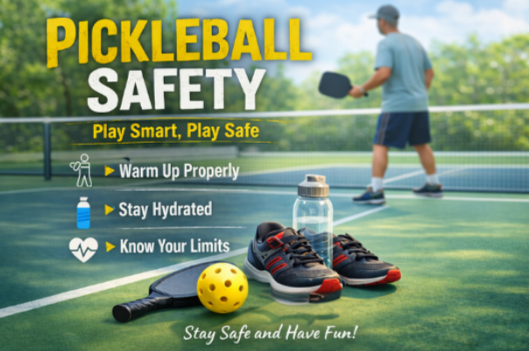
These are some things everyone should do and avoid to make sure you stay safe and prevent injuries on the court.
Do’s:
- Warm-up for 5-7 minutes before any practice or match.
- Stretch before and after a session.
- Hydrate before, during, and after you play.
- Take rests, even when you don’t feel like you need them.
- Consider wearing protective gear, especially if you’re older.
- Take lessons or join beginner programs when you’re first starting out to have a strong foundation.
- Communicate any preexisting conditions or injuries to opponents and match partners.
- Wear sunglasses, visors, and anything else needed to maintain clear vision.
- Invest in quality pickleball gear, especially supportive sneakers.
- Exercise the muscles you use in pickleball with non-pickleball workouts to build strength and flexibility.
- Play with others who are at a similar level of play to you.
Don’ts:
- Don’t overexert yourself; know your body and limits.
- Avoid playing in extreme heat and sun.
- Don’t backpedal or run backward.
- Refrain from playing on courts that could be unsafe, like one that’s wet from rain or snow, has a broken net, or has blemishes and bumps on the court surface.
- Avoid overindulging in food or alcohol before you play.
Pickleball benefits that outweigh risks
Any type of physical activity is better than none, and if pickleball gets you out and moving, keep on playing. If you’re nervous about getting injured, remember that the negative outcomes of a sedentary lifestyle far outweigh any risks associated with pickleball.
We know the main benefits of playing pickleball: increased strength, greater cardiovascular endurance, improved balance and coordination, etc. Pickleball is a peak activity for creating and maintaining overall physical and mental wellness because it has all of the benefits of low-impact aerobic exercise while being a social outlet. Pickleball players have more opportunities to make connections and build strong communities, and benefit from improved cognition, better mental reflexes, and lower rates of depression. Pickleball also promotes healthy aging and lowers heart disease risk.
Beyond these benefits, new research is emerging daily about how pickleball is good for our brains and bodies and how it can treat or rehabilitate patients with various ailments.
Traumatic Brain Injuries & Brain Health: Pickleball is becoming an increasingly common intervention across hospitals nationwide to aid in recovery and rehabilitation related to brain injuries because it is easy to learn, low-impact, and low-risk. Ben Bliek‘s story is just one example. Neurophysiologist and Neuro Athletics founder Louisa Nicola has spoken about how pickleball offers unique benefits because it is a type of proprioceptive training, which focuses on the body’s awareness of space in movement; this enhances stability, balance, and coordination.
Parkinson’s: Individuals suffering from Parkinson’s can also benefit from using pickleball as an intervention. A recent study showed that movements in pickleball somewhat mimic those that patients would be encouraged to do in physical therapy, while being more enjoyable and having the added bonus of better mental health outcomes.
Cardiovascular Disease: Pickleball is great for heart health and preventing cardiovascular events and ailments. In addition to prevention, pickleball can also aid in recovery and rehabilitation. Specifically, pickleball is increasingly used in occupational and speech therapy for stroke survivors.
Addiction: Pickleball has proven to be a useful tool for addiction recovery because it is an approachable, enjoyable, low-impact activity. Pickleball can act as a social connector that promotes mindfulness, reduces stress, and increases confidence for those struggling with addiction.
While Jeff Web’s death is a tragedy, and any pickleball injury is unfortunate, there’s no need to hang up your paddle. Keep our injury-prevention methods in mind, consider investing in lessons or beginner clinics, and do what you can to stay safe on the court.
Sources
Recent Comments